Categories
Latest blog
The Ultimate Wholesale Guide to Biodegradable Bowls: How to Balance Costs and Sustainability?
Dec 17 , 2025In today’s food service and takeaway market, packaging decisions are no longer driven by price alone. Regulatory pressure, brand image, and end-consumer expectations have pushed sustainable packaging to the center of purchasing strategies. Among disposable food containers, paper bowls have become one of the fastest-growing categories, especially Compostable Paper Bowl,Biodegradable Paper Bowl, and Customized Logo Paper Bowl products designed for wholesale and private-label supply.
According to global food packaging market data, paper-based food containers now represent more than 40% of new food service packaging launches, with compostable formats showing the highest year-on-year growth. Paper bowls, in particular, are widely adopted by:
For wholesalers, offering certified Biodegradable Paper Bowl options is no longer a differentiation point—it is a baseline requirement.
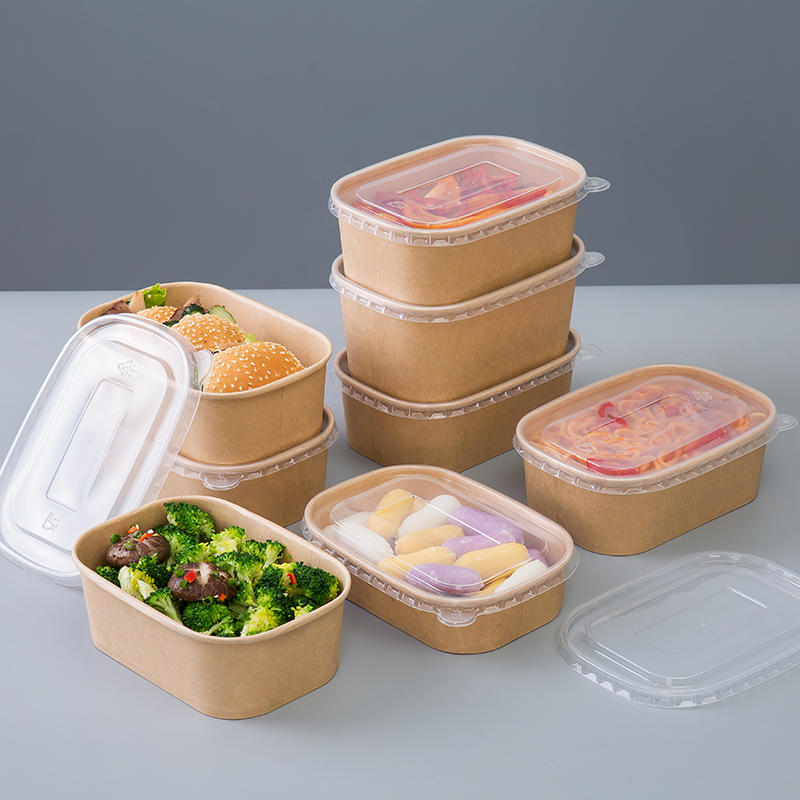
Although often used interchangeably, compostable and biodegradable paper bowls serve different procurement needs.
| Feature | Compostable Paper Bowl | Biodegradable Paper Bowl |
|---|---|---|
| Decomposition condition | Industrial or home compost | Natural environment over time |
| Typical coating | Water-based or PLA | Water-based or low-PE |
| Certification | EN 13432, ASTM D6400 | Regional biodegradability standards |
| Target buyers | Eco-certified brands | Cost-sensitive mass buyers |
A Compostable Paper Bowl is designed to break down fully into non-toxic elements under composting conditions, making it suitable for brands with strict environmental claims. A Biodegradable Paper Bowl, on the other hand, focuses on reduced environmental impact while maintaining more competitive pricing for large-volume distribution.
Understanding unit cost drivers is critical when sourcing paper bowls at scale.
| Cost Component | Percentage |
| Paperboard & pulp | 48–55% |
| Inner coating | 10–14% |
| Manufacturing & labor | 15–18% |
| Printing & finishing | 4–7% |
| Packaging & logistics | 10–13% |
For wholesalers, selecting the right material grade and coating for a Biodegradable Paper Bowl can reduce costs by 8–12% compared with fully compostable options, while still meeting most market regulations.
Regardless of sustainability claims, functional performance remains a purchasing priority.
| Performance Metric | Industry Standard |
| Heat resistance | Up to 95°C |
| Leak resistance | ≥60 minutes |
| Oil resistance | Suitable for oily foods |
| Structural rigidity | No deformation when filled |
A well-manufactured Compostable Paper Bowl should perform consistently for soups, noodles, rice dishes, and mixed hot foods without softening or leaking.
Customization is often underestimated in wholesale packaging. In practice,Customized Logo Paper Bowl programs create stronger brand recognition and improve customer retention for food service clients.
At production volumes above 50,000 units, logo printing typically increases unit cost by only3–6%, while significantly enhancing perceived brand value. For wholesalers, this translates into higher repeat orders and better long-term account stability.
Certifications are essential when supplying international markets.
| Market | Required or Common Certifications |
| European Union | EN 13432, OK Compost |
| United States | ASTM D6400, BPI |
| Australia | AS 4736 |
| Food contact | FDA, LFGB |
A certified Compostable Paper Bowl or Biodegradable Paper Bow ls implifies customs clearance and reduces compliance risks for wholesalers and distributors.
Shipping efficiency has a direct impact on landed cost. Bowl nesting depth, carton design, and pallet optimization can improve container utilization by10–15%.
| Packaging Design | Bowls per Carton | Space Efficiency |
| Standard nesting | 500 | Baseline |
| Optimized nesting | 560 | +12% |
These savings help offset higher material costs associated with compostable coatings.
When sourcing Paper Bowls, wholesalers should prioritize suppliers with:
Manufacturers with integrated printing and forming lines typically provide more consistent quality and better cost control over long-term cooperation.
Sustainable paper bowls are no longer a short-term trend. By selecting the right balance of compostability, biodegradability, and customization, wholesalers can build competitive product lines that meet environmental expectations while maintaining strong commercial performance.






Xiamen GLAMAN environmental technology Co., Ltd




 Phone : +86 18759299872
 Email : zheng@glamanpaperlid.com